Nexora AI
AI Powered Cybersecurity Learning & Threat Detection Platform
A comprehensive cybersecurity platform combining real time multi source threat intelligence, AI generated risk explanations, and gamified security education across web, mobile, and browser environments.
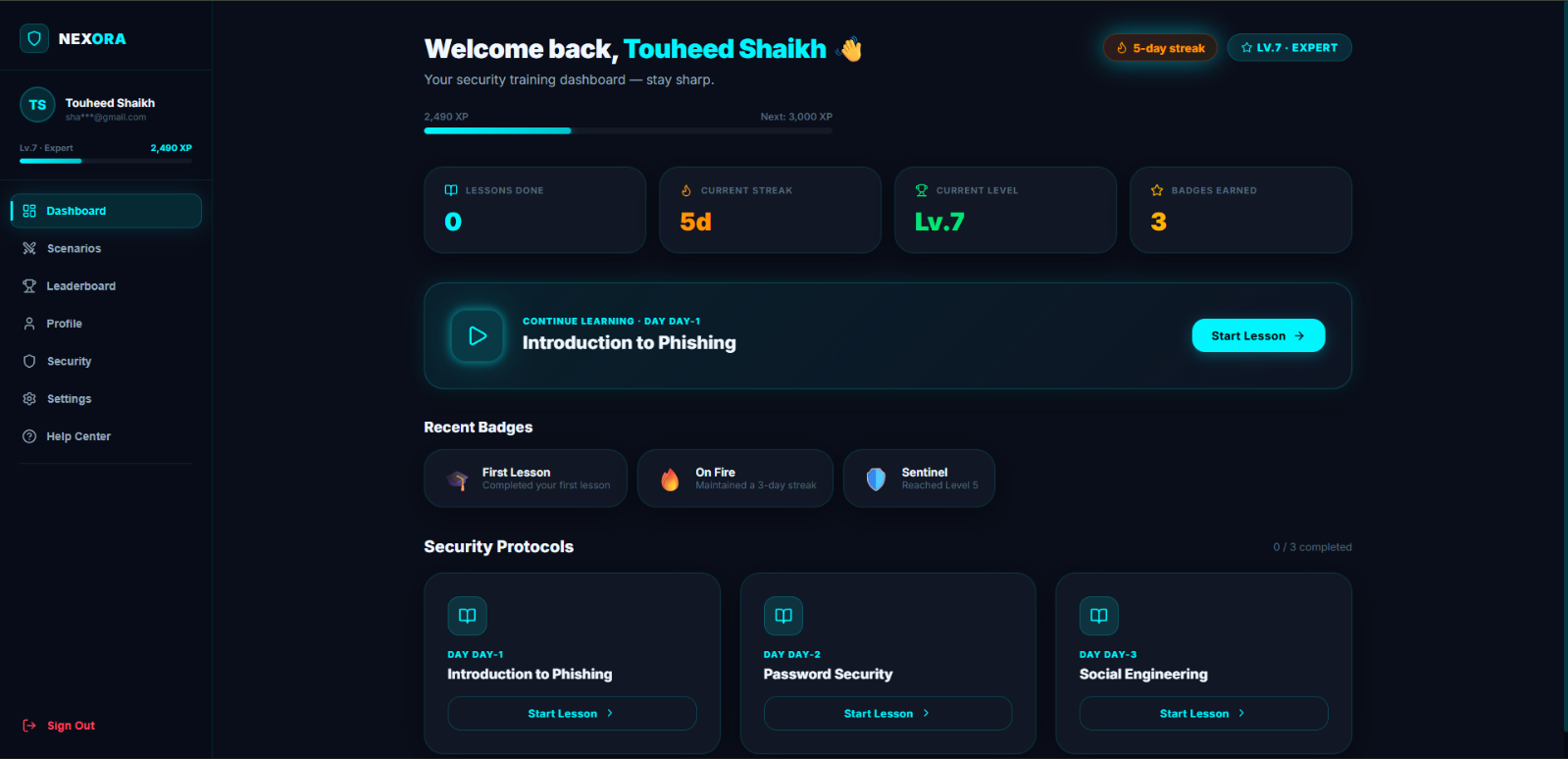
Project Overview
Nexora AI was developed as a flagship team project for the NeoFuture 2026 Hackathon and our Second Year Mini Project. It addresses the critical disconnect between automated threat detection tools and everyday human decision making.
Traditional cybersecurity tools typically return cryptic cryptographic hashes, raw domain reputation codes, or simple binary verdicts (e.g., “malicious”) that non technical users cannot decipher. Nexora AI re-engineers this experience by pairing multi source threat intelligence with high speed LLM reasoning to explain why an SMS, URL, or file is perilous, what financial risks it poses, and how to practice defense through adaptive gamified simulations.
The Problem & Context
The Core Fragmentation Problem
Cybersecurity detection tools and cybersecurity education operate in completely isolated silos. When everyday individuals receive fraudulent banking SMS messages, fake KYC links, or credential harvesters, they lack the tools to understand the underlying attack vector and prevent future exploitation.
Traditional scanners output technical error codes rather than clear threat indicators.
Security awareness training happens on generic slides instead of real, contextual incident triggers.
Threats target users across mobile SMS, UPI payments, email, and desktop browsers simultaneously.
The Solution: Detect → Explain → Teach → Practice
Nexora AI unifies detection, AI explanation, and interactive education into a closed feedback loop:
Analyze Content
Scans suspicious URLs, APK/file hashes, SMS messages, and screenshots via OCR.
AI Reasoning
Gemini & Groq explain red flags, attack motives, and financial/credential impact.
Connect Protocol
Links the detected threat pattern directly to structured security learning modules.
Gamified Sim
Tests user reflexes with dynamically generated phishing scenarios and awards XP.
Real Time Threat Detection & Multimodal Scanners
Nexora AI supports multi channel threat detection designed for real world attack vectors:
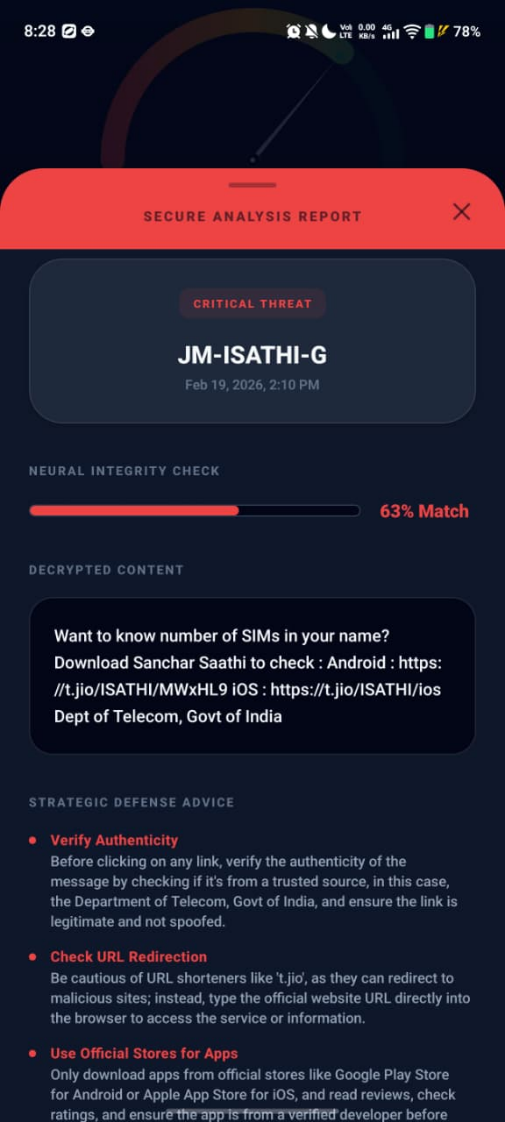
Actual mobile analysis report: 63% neural match & strategic defense advice.
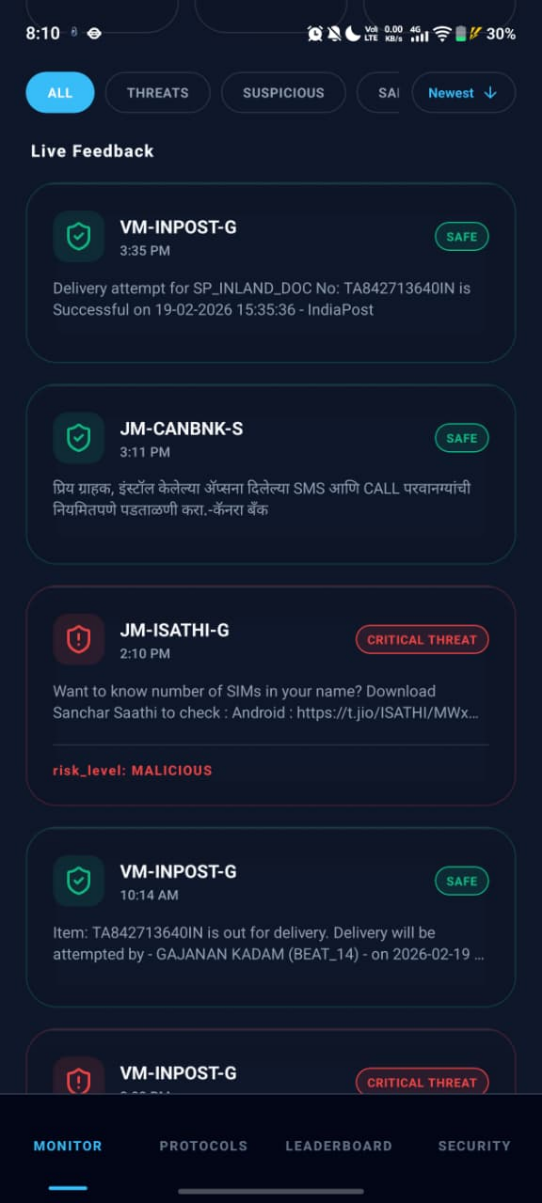
Live inbox monitoring filtering benign IndiaPost / bank SMS from malicious links.
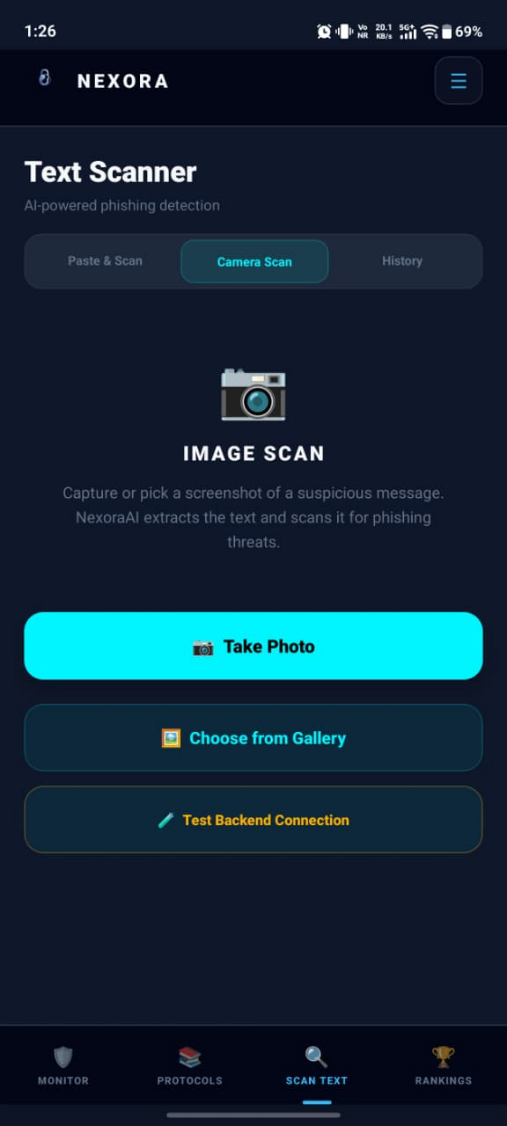
OCR extraction pipeline analyzing photo screenshots for embedded deceptive URLs.
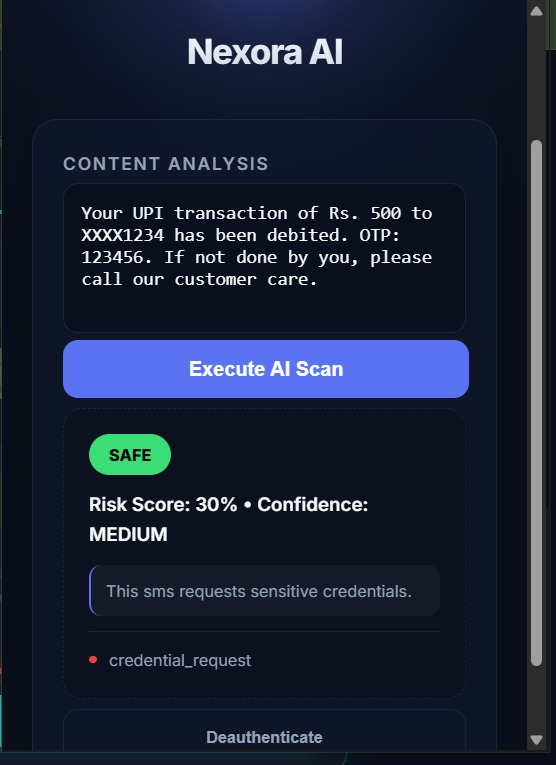
Browser extension scanning UPI debit SMS & checking for credential harvesting requests.
1. Multi Feed URL Reputation
Queries Google Safe Browsing API and VirusTotal endpoint reports concurrently to verify domain trust ratings, known malicious redirects, and newly registered fraudulent domains.
2. File / Hash Reputation
Computes SHA-256 hashes of uploaded payloads or APK files and checks threat repositories across 70+ antivirus engines via VirusTotal v3 API.
3. Credential Breach Lookup
Integrates Have I Been Pwned (HIBP) k-anonymity API to verify whether email addresses or credentials appeared in historical data breaches.
4. Heuristic & OCR Parsing
Extracts text from screenshots via mobile OCR, parses urgency triggers (“KYC suspended”, “Electricity bill overdue”), and flags domain spoofing.
Dedicated AI Reasoning & Voice Layer
Rather than generic AI wrappers, Nexora AI strategically distributes LLMs and audio synthesis across specialized system functions:
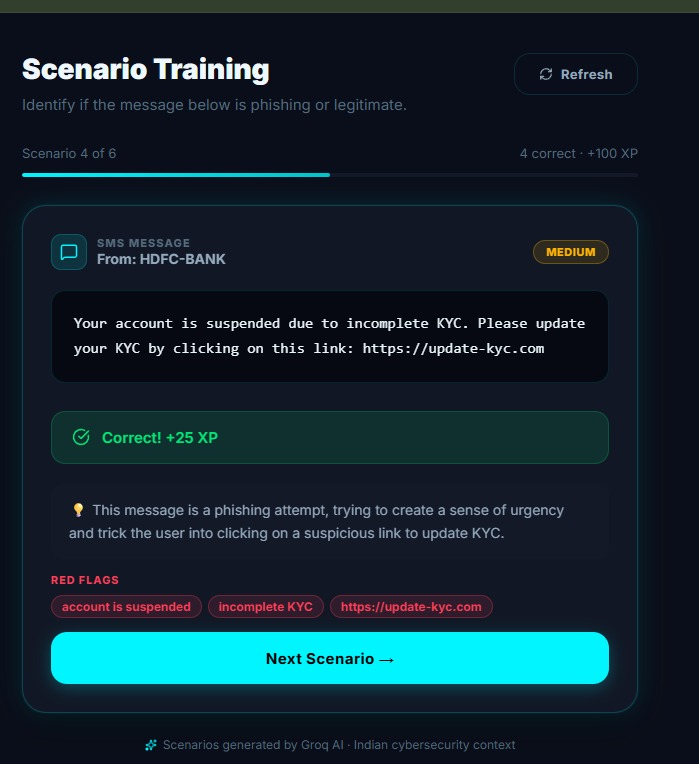
Dynamic Groq AI simulation extracting Red Flags (account is suspended, incomplete KYC) with Indian banking context.
Explainable AI & Security Tutor
Synthesizes aggregated technical indicators into contextual natural language risk explanations and actionable step by step remediation advice.
Dynamic Scenario Generator
Generates instant, localized phishing scenarios (HDFC, SBI, Electricity scams) under 500ms latency to test user decision making in real time.
Multilingual Voice Tutoring
Converts security lessons into high fidelity spoken audio across multiple Indian regional languages for enhanced accessibility.
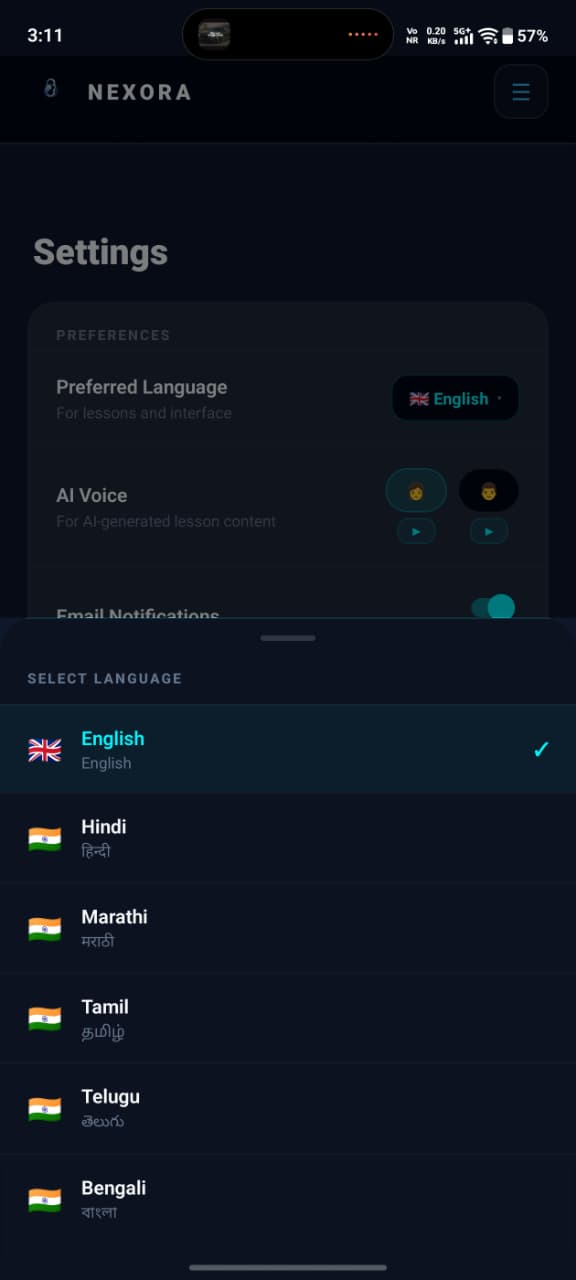
User preference modal supporting English, Hindi, Marathi, Tamil, Telugu, and Bengali voice lessons.
Security Education & Gamification Engine
To transform cybersecurity awareness into an engaging habit, Nexora AI incorporates a comprehensive gamification loop with structured protocol modules, XP rewards, streaks, and achievement badges.
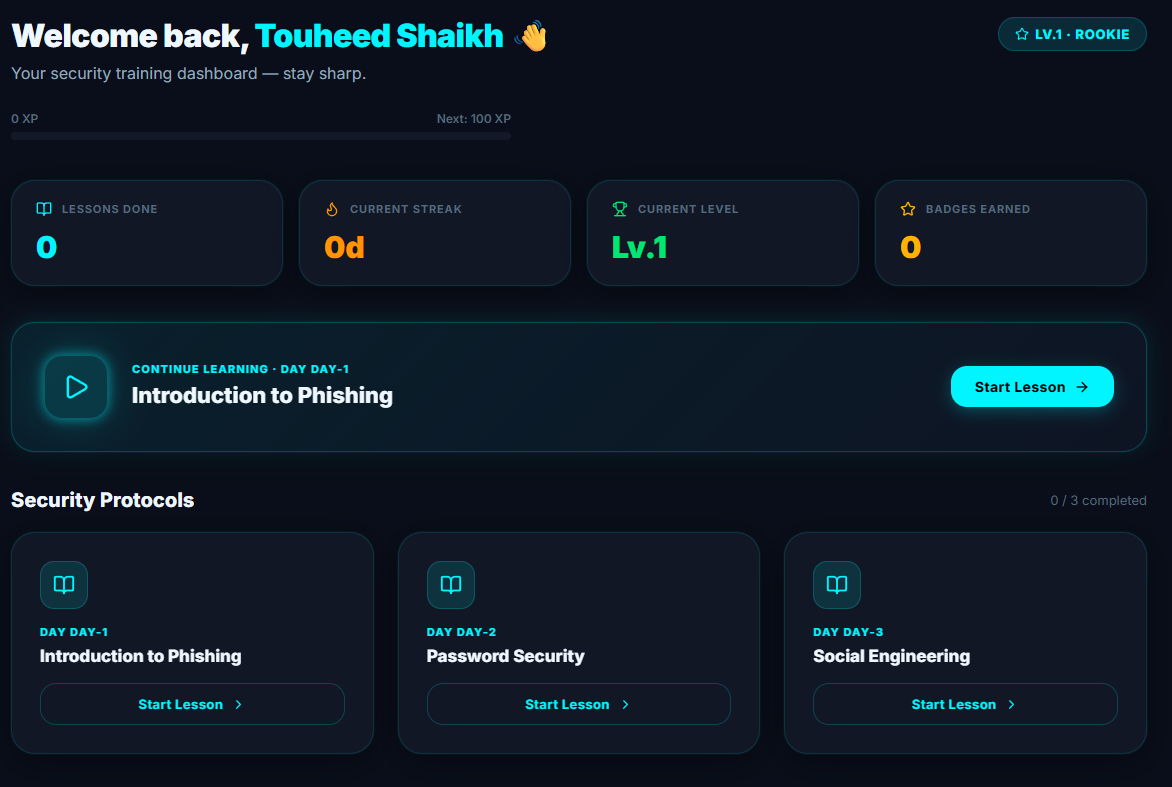
Daily structured learning tracks: Introduction to Phishing, Password Security, and Social Engineering.
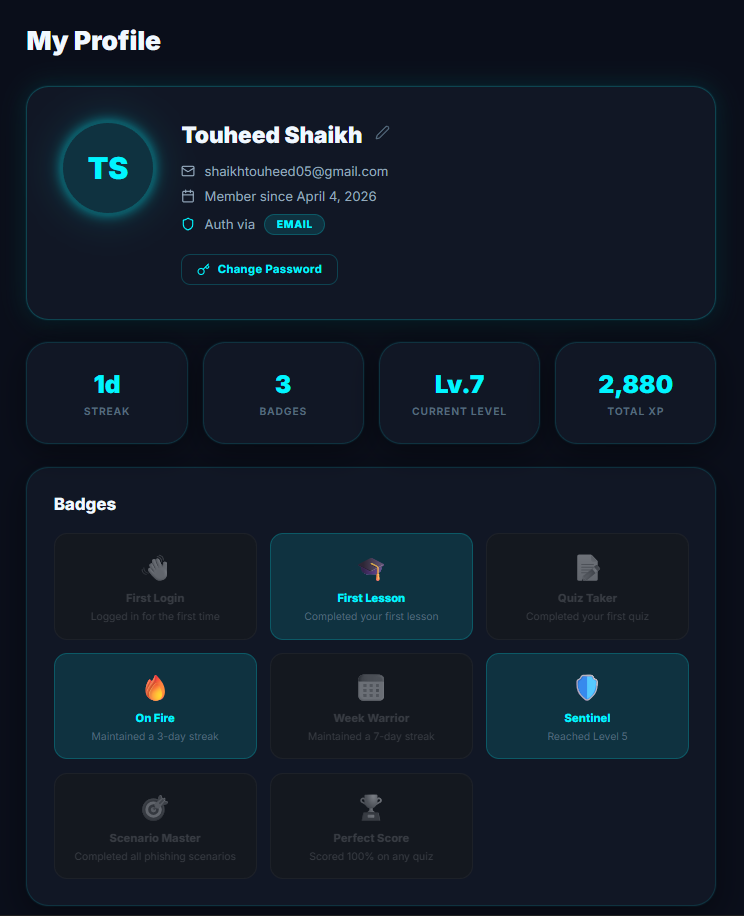
Profile tracking: Level 7 Expert ranking, 2,880 total XP, streaks, and unlocked badges (First Lesson, On Fire, Sentinel).
Multi Platform Delivery: Web, Mobile & Browser
Nexora AI is engineered across three native client targets to protect users wherever they encounter digital communications:
React + Vite SPA
High performance web dashboard featuring comprehensive threat analysis, deep security lessons, leaderboards, and user settings.
React Native & Expo
Cross platform mobile application providing instant camera OCR screenshot scanning, real time SMS stream monitoring, and on device alerts.
Chrome Manifest V3
Lightweight browser extension intercepting suspicious page links, analyzing active tab DOM text, and performing instant UPI message checks.
System Architecture & Microservices
The system follows a clean decoupled microservices architecture centered on asynchronous Python services and external security engines:
Asynchronous Python API layer handling request orchestration, security payload parsing, rate limiting, and threat stream aggregation.
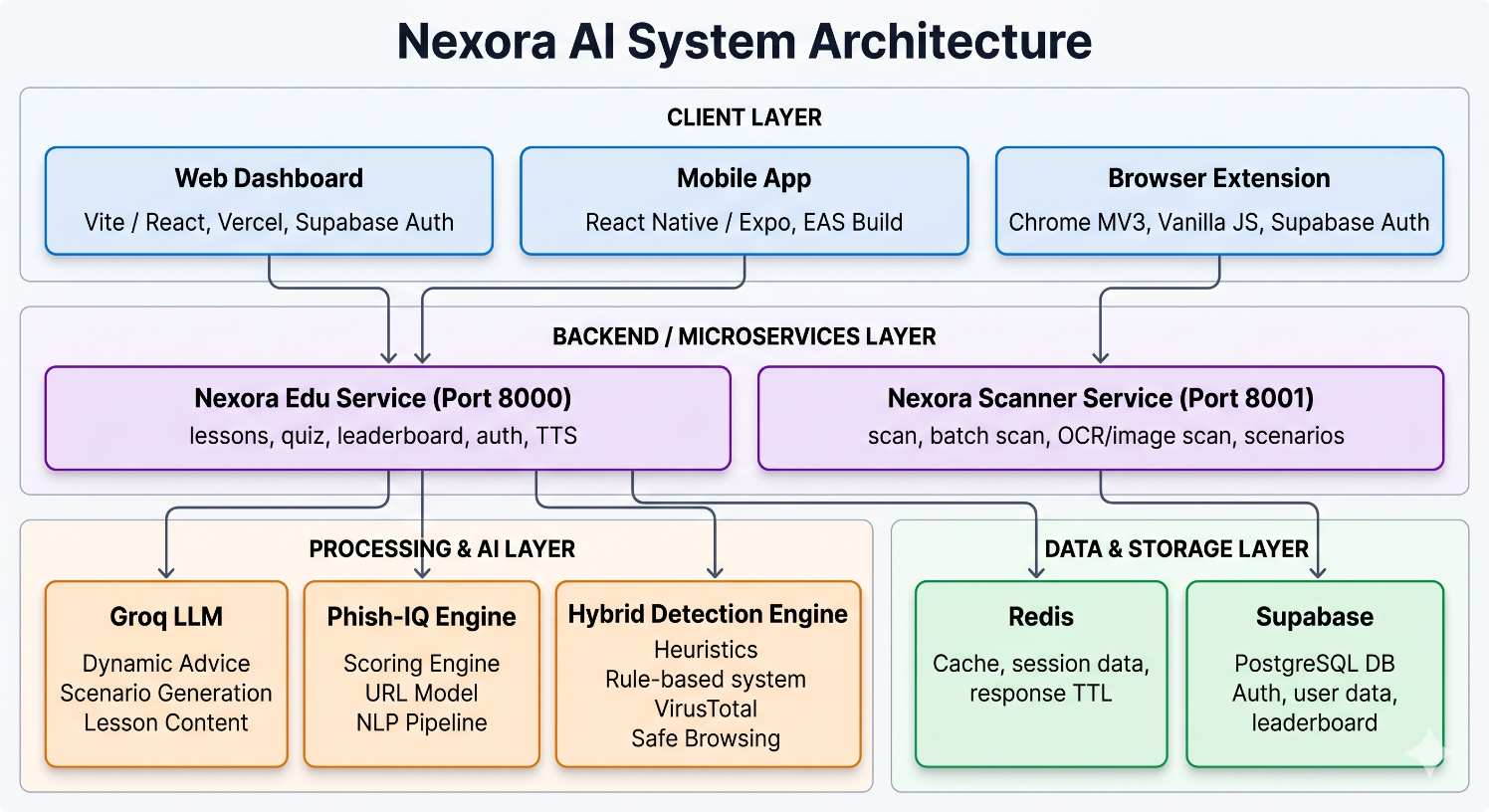
Full 4 tier architecture: Client Layer → Microservices Layer → Processing & AI Layer → Data & Storage Layer.
Architectural Breakdown:
- Microservices Backend: Two dedicated FastAPI microservices:
Nexora Edu Service (Port 8000): Handles lesson tracks, quiz evaluation, leaderboard rankings, user auth, and ElevenLabs TTS audio streaming.Nexora Scanner Service (Port 8001): Dedicated high throughput scanner for single/batch URL scans, OCR image uploads, and Groq scenario generation.
- Processing & AI Layer: Parallel execution of the Phish-IQ scoring engine, rule based heuristics, VirusTotal/Google Safe Browsing APIs, and Groq/Gemini LLM inference.
- Data & Storage Layer: Supabase (PostgreSQL) manages user state, authentication, and security logs, while Upstash Redis handles rate limiting and query caching with TTL expiration.
My Role & Contribution
Backend Engineering & Team Lead
Developed the FastAPI backend functionality and API layer for the platform, and worked across the web, mobile and Chrome extension components alongside the backend. I also integrated external threat intelligence and LLM services and used generative AI tools throughout development for prototyping, debugging and learning.
Constructed the REST API endpoints, async request orchestrators, and threat intelligence aggregators.
Led architectural discussions, edge case analysis, and integration across web, mobile, and browser clients.
Project Scope & Technical Limitations
In alignment with rigorous engineering standards, the following project boundaries are transparently documented: